WhatsApp Comes To The Desktop

whatsapp
Are you one of the 600 million people on WhatsApp? Do you grow tired of having to type all of your messages through your phone? Good news!

There’s now a desktop version.

It’s a web app rather than a native client — and for now, at least, it seems to only play friendly with Google Chrome.

But if you’re ready to dive in, you can find the new web-ready version of WhatsApp right over here…

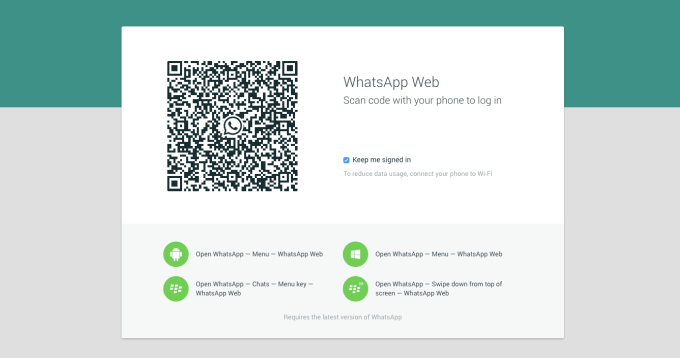
One weird catch: to log in on the desktop, you have to take a picture of a QR code through WhatsApp on your phone. This is necessary, presumably, because WhatsApp uses your phone number and SMS verifications rather than usernames/passwords. This currently works on Android, Windows Phone, and BlackBerry… but “due to Apple platform limitations” (WhatsApp’s words, there — we’re not sure what limitations they mean), iOS users are left out in the cold.

On the platforms where it works, however, it’s very slick.

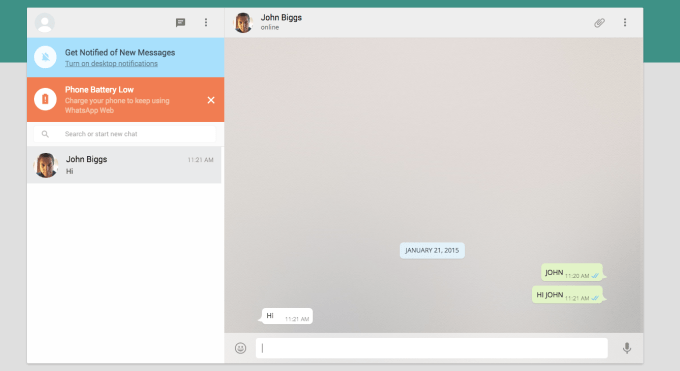
Curiously, it seems as if it’s using your phone for more than just the initial login; note the orange warning in the screenshot below. If your phone dies, so does your WhatsApp web connection.
jorn

Comments

Popular posts from this blog

Build Your Own Awesome Personal 3D Avatar with Avatara

Do you use social networks and want to build your own awesome 3D avatar? Maybe you want to send someone a cute cuddly image of yourself (kind of)? Or maybe you have your own ideas of what you would do with an Avatar… Well look no further than Avatara which I discovered from the MakeUseOf directory . You can create 3d avatars out of pre-set up templates or create your own from scratch. To start, visit Avatara’s homepage . You will see this screen: Click Get Started to umm, get started! That will take you to this screen: You see that you can build your own Avatar using an uploaded head shot like the Obama one above (just an example, guys). Or roll with one of their awesome avatars. I chose to start with a blank avatar by clicking Start with a blank avatar at the bottom of the screen. That takes you to here: I clicked on the filter at the top and told it to filter out everything but male characters and then I saw this: I rolled with Buck and continued. You need to click Select...

Fun Tools to Translate Your Name into Japanese Calligraphy

Japanese calligraphy is an artistic writing style of the Japanese language. Its Chinese origins can be traced back to the twenty-eighth century BCE. Calligraphy found its way into Japanese culture in 600 CE and is known as the karayo tradition. For Westerners, calligraphy is forever fascinating. However, it takes years to learn how to properly draw the signs. Two basic principles must be known to understand Japanese writing: there are different writing styles and different alphabets. Kaisho for example, is a writing style most commonly used in print media. Tensho on the other hand is used in signatures. Other writing styles are Reisho, Gyosho and Sousho. The alphabets include Kanji, Hiragana, and Katakana. Katakana is used for writing foreign words. It can also serve to highlight words, in analogy to capital letters as we know them from the Roman / Latin alphabet (Romaji in Japanese). Each Kanji character has a meaning of its own, while Hiragana or Katakana characters merely repres...

Boom, the startup that wants to build supersonic planes, just signed a massive deal with Virgin

Have you heard about Boom? Boom is a relatively new startup that’s aiming to build something pretty crazy. They’re not building an app… or a social network… or even some new gadget for the Kickstarter crowd. Boom wants to build planes. Really, really, really fast planes. Specifically, they’re trying to design and build a supersonic passenger plane that goes 2.2x the speed of sound. If all goes to plan, they’ll be able to shuttle people from New York to London in 3.5 hours, and SF to Tokyo in 4.5. Sound crazy? I wouldn’t disagree. It’s worth noting that the company is in the very early days for something as intensive, massive, and hugely expensive as designing and producing a passenger aircraft. They’re still working on their first prototype, and hope to fly it by late next year. But it’s also worth noting that the team behind the plane has some serious talent in its blood: the company’s 11 employees have collectively contributed to over 30 aircrafts — having worked on thin...